
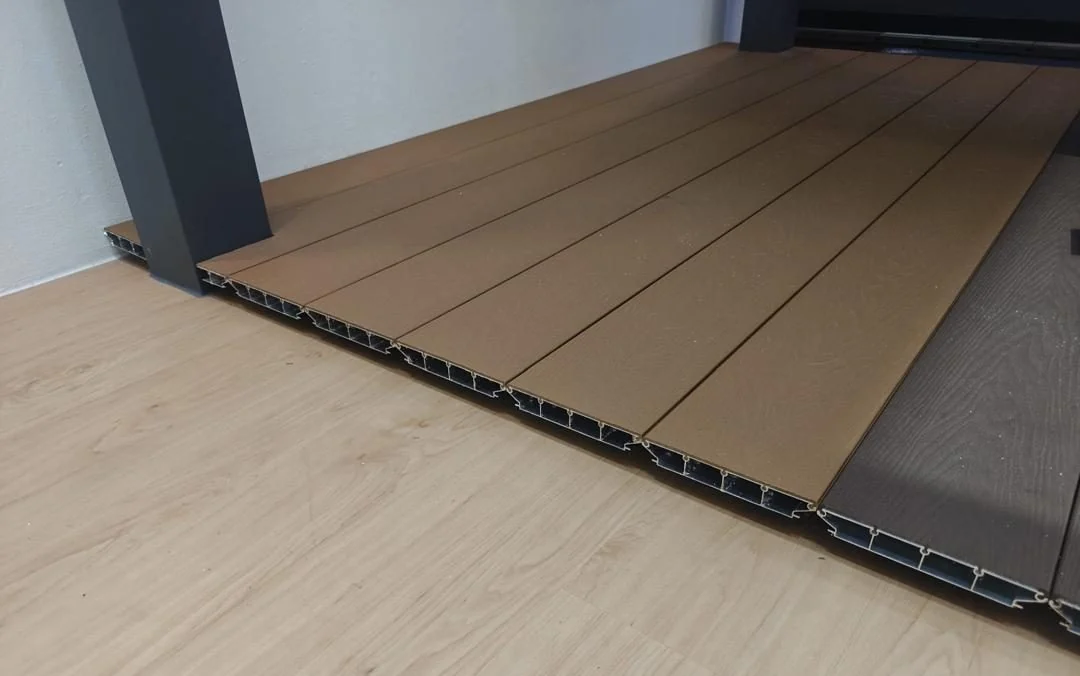
Start with where the deck is
A covered balcony and an unshaded rooftop are different problems. Shade, rain exposure and how much the surface is walked on barefoot decide more than the brochure does.
If the deck is covered and low traffic, the cheapest of the three will probably serve you for years. If it is fully exposed, the material choice starts to matter.
Where aluminium wins
It does not rot, warp or crack. It is not a food source for termites. It needs washing rather than sanding, oiling or staining on a cycle.
It is the lightest of the three, which matters when loading on a balcony or roof slab is capped. And aluminium itself does not burn.
Where aluminium loses
Cost. It is the premium option. On a small shaded deck the premium is hard to justify.
Surface heat. In direct midday sun it gets hot underfoot. So does composite. Timber stays coolest. Texture and lighter colours help, but they do not remove it.
Close up it reads as metal. Timber look finishes are convincing from standing height. Kneel down and you can tell. If you want real grain, buy real timber.
Where WPC sits
Wood plastic composite is the value answer and it is why most Singapore decking is sold as WPC. It resists rot, needs no oiling, and cuts and frames like a board so it takes a curve easily.
The honest caveats: it can expand and sag between joists in heat, timber flour content varies by brand, and it contains plastic and will burn.
And timber
Hardwood is still the best thing to stand on barefoot and the only one with real grain. It is also the only one with a maintenance schedule, and in this climate the schedule is the part nobody keeps to.
If you will genuinely sand and oil it on a cycle, timber is a legitimate choice. If you know you will not, it is the most expensive of the three over ten years.